The Distinguished Teaching Awards and Excellence in Teaching Awards are among the highest forms of recognition for teaching excellence given at the University of Washington. Recipients are selected through a rigorous nomination and peer review process. Join us in congratulating this year’s recipients for their deep commitment to reflective, learner-centered teaching.
Distinguished Teaching Award
Recognizing UW faculty members
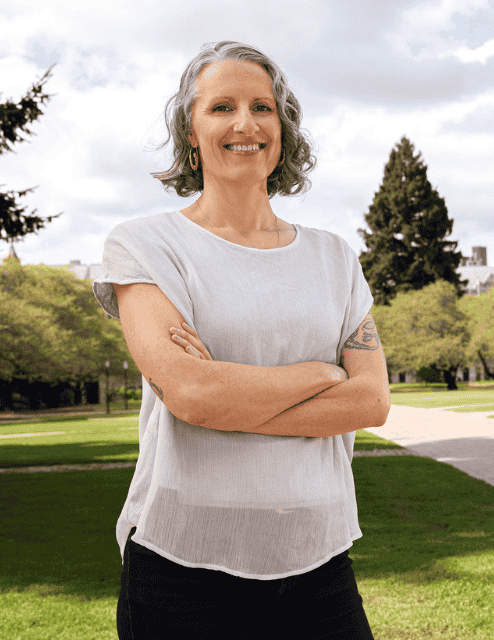
Megan Callow
Teaching Professor, English, College of Arts and Sciences, UW Seattle
Callow has had a transformational impact on writing instruction at the UW. As the founding Director of Writing@UW, Callow helped foster a culture of writing on campus and centralize pedagogical support for faculty teaching writing across UW’s three campuses. Despite being an expert on writing pedagogy, Callow approaches her teaching as a learner. Her teaching models reflective practice, continually reflecting and iterating on assignments and assessment approaches. Students and colleagues remark on how her openness and vulnerability has helped promote a climate of sharing and improvement among fellow faculty members and students alike. In addition to being reflective, Callow’s teaching practice is also deeply learner-centered. As one colleague noted, Callow “designs active learning experiences that let students bring their own experiences and expertise to the classroom.”
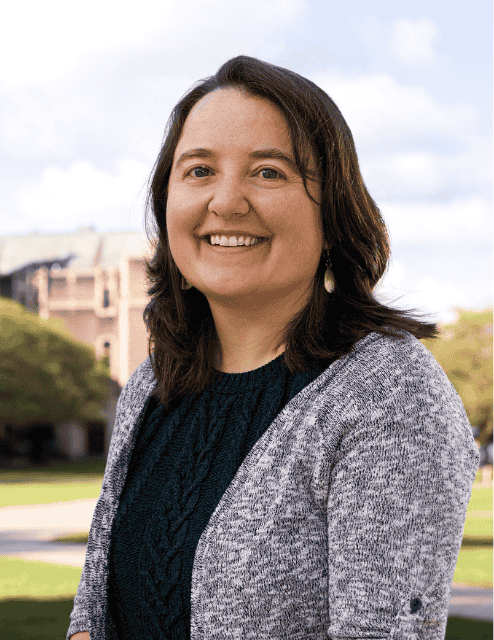
Hannah Jordt
Associate Teaching Professor, Genome Sciences, UW School of Medicine, UW Seattle
Jordt excels at creating inclusive learning experiences in her large STEM courses. Through strategies such as communicating a growth mindset and incorporating high-intensity active learning that connects genetics and genomics to students’ lives, Jordt intentionally incorporates strategies that have been shown to reduce learning gaps in college STEM classrooms. Jordt also pursues a multi-prong effort to build community through efforts such as sending personalized post-exam emails to bolster self-efficacy and demonstrate care; by developing a peer facilitator program for undergraduate students; and through workshops for graduate students and faculty colleagues across departments. Jordt has strengthened her disciplinary communities through extensive Discipline Based Educational Research efforts and education-focused service work for the National Society of Genetic Counselors.
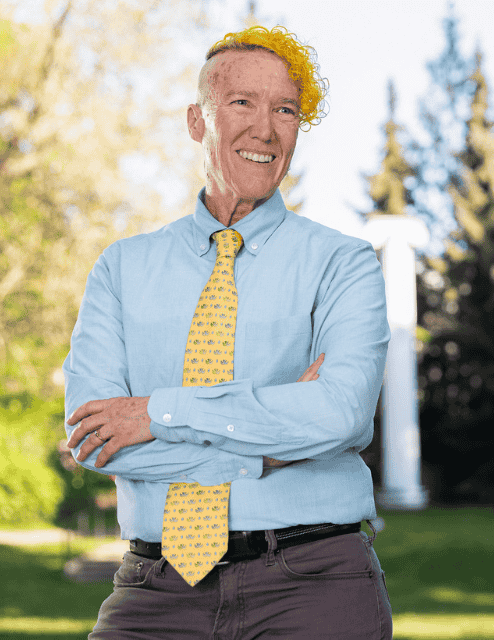
Wes King
Assistant Teaching Professor, Information School, UW Seattle
King’s teaching embodies what higher education does best, making space for students to critically examine complex issues and perspectives in relation to one another. Their “AI, Robots, and Religion” course aims to cultivate active learners who balance theoretical understanding with experiential application. Students compare religious views on intelligence, reflect on personal experiences, and analyze cultural narratives about AI and transhumanism. As one colleague noted, “King’s courses encourage our students to face the messiest of tensions in our social worlds, creating constructive spaces for students to deeply reflect on the role of information in these tensions, and think critically about the limitations of their perspectives and others, and the role of their positionalities in the critiques they form.”
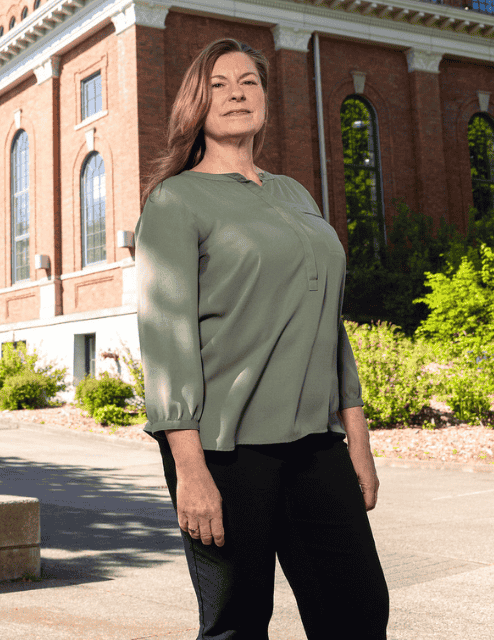
Jill Purdy
Professor, Milgard School of Business, UW Tacoma
Purdy’s teaching excellence impacts both students and the teaching culture at UW Tacoma. Purdy creates a welcoming classroom atmosphere conducive to respectful engagement on complex topics, reduces cost barriers by developing her own materials, and builds bridges across disciplines through campus-wide entrepreneurship workshops. Across 30+ years of teaching, Purdy provides clear cycles of observation, reflection, adjustment, and refinement. She adapts to emerging contexts, tailors content to the learners’ needs, and emphasizes real-world learning through community-engaged consulting projects with local organizations. Purdy also provides substantial service as a mentor and thought partner on teaching matters, and collaborates across units and institutions to support faculty growth at UW Tacoma.
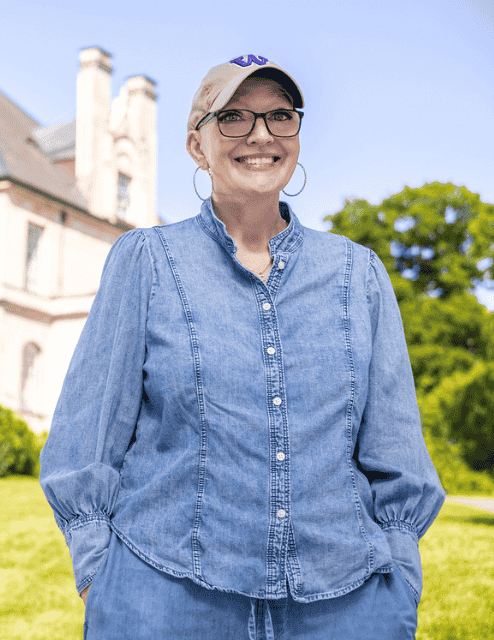
Georgia M. Roberts
Lecturer, American Ethnic Studies, School of Interdisciplinary Arts & Sciences, UW Bothell
Georgia M. Roberts designs courses that bring interdisciplinary scholarship, critical inquiry and reflective practice into direct conversation with students’ lived experiences. A scholar of American Studies with a focus on literature and popular music, she creates classrooms where students test ideas across disciplines and connect academic work to cultural and personal contexts. At UW Bothell, Roberts is known for her sustained mentorship of students and her leadership in shaping inclusive, anti-racist teaching practices across campus. Her work with colleagues and students alike reflects a commitment to building learning environments where more voices are welcomed and taken seriously.
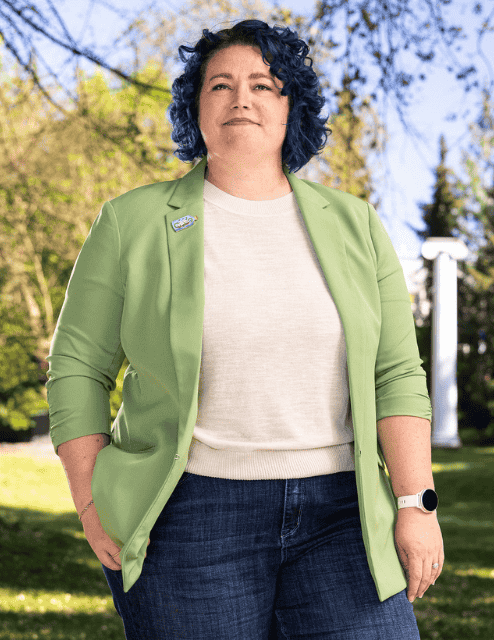
Casey Self
Teaching Professor, Biology, College of Arts and Sciences, UW Seattle
As a first-generation college student herself, Self is committed to dismantling systemic barriers to equity in higher education, using evidence-based teaching practices that create equitable learning environments. By incorporating reflections and retakes into almost every assignment, she encourages students to see learning as iterative rather than grade bound. She models this mindset by sharing her own reflections and areas for improvement. As chair of the Faculty Council on Teaching and Learning, Self helped shepherd legislation through shared governance to promote teaching effectiveness across the university. She has also served the wider STEM-teaching community by developing a continuing education course for high school teachers and community college faculty.
Excellence in Teaching Award
Recognizing UW graduate student instructors and teaching assistants
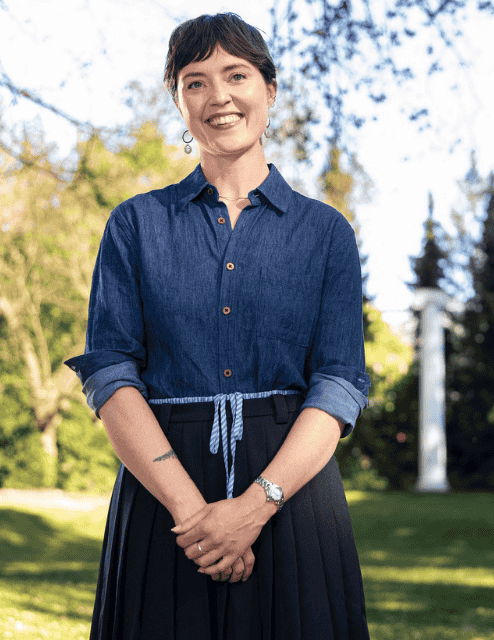
Rachael Herren
Doctoral Candidate, School of Drama, College of Arts and Sciences, UW Seattle
Herren sees the theatre classroom as “a safe and productive space to rehearse the complexity of adult life.” An example of this is her use of “speaking in drafts,” which allows students to rehearse and revise their spoken contributions to class discussions in a space free of judgment. Her care and encouragement of students’ scholarship have led a number of her former students to share original research projects at conferences, such as the American Society for Theatre Research conference, the Mid-America Theatre Conference, and UW’s Undergraduate Research Symposium. Herren has had an enormous impact on student learning at the UW through numerous teaching roles — including as TA for the Drama Scotland Study Abroad program; instructor of record for an upper-level critical theory course; and as lead TA for Drama 101, where she mentored fellow PhD students who were new to teaching.
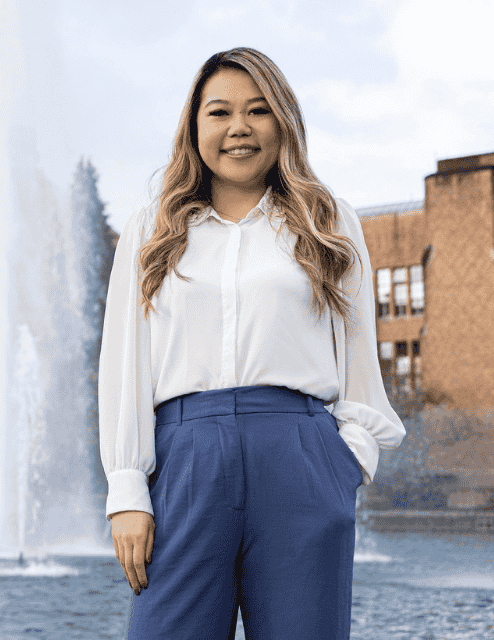
Jennifer Zheng
Graduate Student, Communication, College of Arts and Sciences, UW Seattle
Zheng has served multiple roles as a graduate student teacher including as instructor of record, TA, and more recently as lead TA for COM 200, which enrolls over 400 students. As a lead TA, Zheng organizes, advises, and mentors other course TAs, guiding them through what is for many their first teaching experience. Zheng has had a tremendous impact on students within and beyond the UW. She serves as the graduate student editor for the Communication Center Journal, where she collaborates with undergraduate students to publish work on how to make higher education spaces accessible and equitable for all students. As one of her former students noted, “Jennifer saw potential in me before I even saw it myself. When I was applying to graduate school, she recommended a program I hadn’t heard of before, but turned out to be a perfect match for my interests…The habits she helped me build — reflecting before reacting, asking better questions, and connecting course concepts to real people and real-world contexts — continue to guide how I learn in graduate-level classes.”
Distinguished Teaching Award for Teams
Recognizing instructional collaborators and teams at the UW
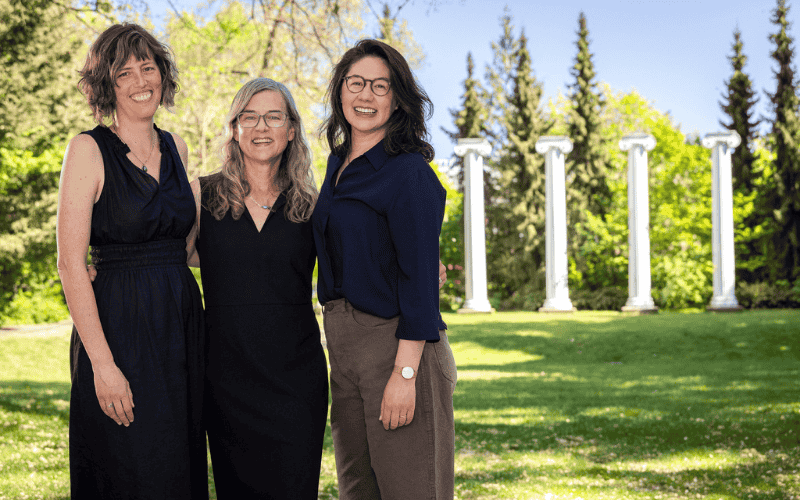
Collier-Otten-Spiker Teaching Team
Collier, Otten, and Spiker initially came together around the shared goal of building an interdisciplinary educational program for future professionals in the rapidly evolving field of food systems. Their voluntary collaboration produced much of the curriculum for UW’s Food Systems, Nutrition, and Health major. The team collaborated to develop learning experiences that embody the principles of the UW Civic Health Initiative long before that initiative formally existed. Their use of deliberative polling helps students explore diverse perspectives on challenging issues – skills that prepare them to act as change agents in civic space after graduation. As one student noted, the team has created learning and mentoring experiences that helped students think critically for themselves, allowed them to struggle positively through deep reflection, and reach a nuanced understanding of complex food system topics.
- Sarah Collier, Assistant Professor, Environmental and Occupational Health Sciences, UW Seattle
- Jennifer Otten, Professor, Environmental & Occupational Health Sciences, UW Seattle
- Marie Spiker, Assistant Professor, Epidemiology, UW Seattle
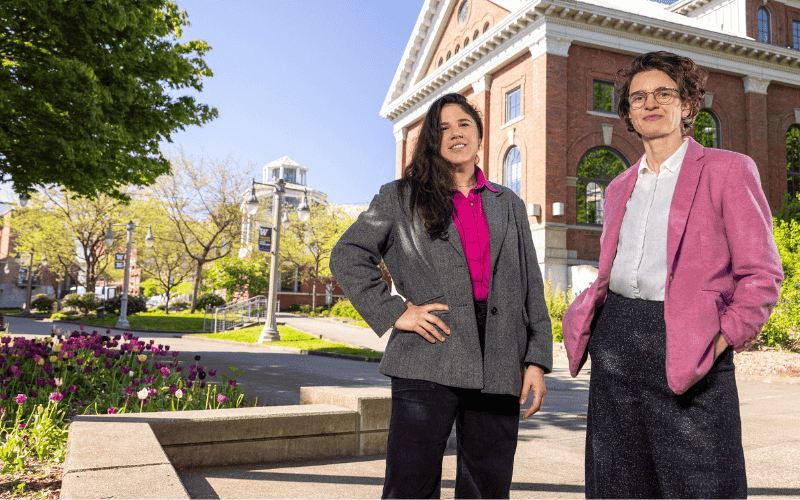
Community Engaged Civil Engineering and Urban Design Capstone
This team integrates rigorous technical learning with projects rooted in authentic community needs and complex real-world challenges. Their interdisciplinary capstone course (CollabCapstone), brings together Civil Engineering and Urban Design students to work directly with university partners, city stakeholders, and local firms to help create a new vision for UW Tacoma’s 2050 Master Plan. By immersing students in real challenges, the course design and assignment nurture not only technical competence but also civic responsibility. Additionally, the team also mentored student cohorts through the 2025 EPA campus rainworks challenge, meeting weekly to discuss and work on challenges related to UW Tacoma’s existing stormwater water systems and other infrastructure. Their work focused on identifying adaptations needed over the course of the next 25 years.
- Nara Almeida, Assistant Teaching Professor, School of Engineering and Technology, UW Tacoma
- Bára Šafářová, Assistant Professor, School of Urban Studies, UW Tacoma